


Pryor Mountain Mustang
A species of Equus caballus Scientific name : Pryor Mountain Mustang Species : Equus caballus
Pryor Mountain Mustang, A species of Equus caballus
Scientific name: Pryor Mountain Mustang
Species: Equus caballus
Content
Description General Info
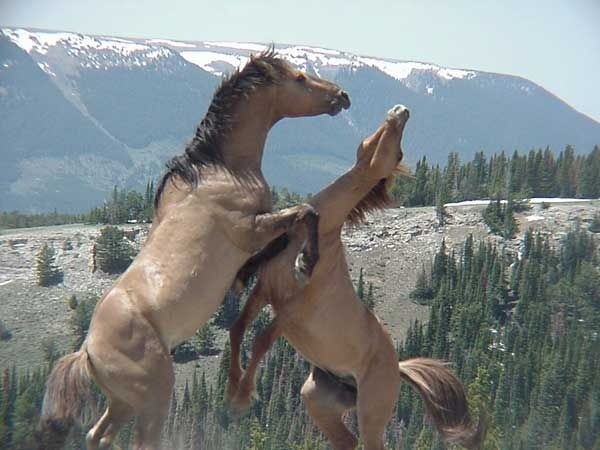 Photo By Bureau of Land Management, U.S. Department of the Interior , used under PUBLIC-DOMAIN /Cropped and compressed from original
Description

Originating from the rugged Pryor Mountains situated on the Montana-Wyoming border, the pryor Mountain Mustang hold a unique place in equine history for their Spanish Colonial genetics. This breed boasts a robust constitution, shaped by a harsh natural environment, lending to superior hardiness and stamina. Distinctive for its primitive markings and dun coloring, the pryor Mountain Mustang has, over time, evolved into an emblem of wild North American heritage.
Care Level
Moderate

General Info
Origin
United States
Lifespan
15-20 years
Characteristic:UsageDescription
Riding, showing, endurance racing, pleasure riding, ranch work
Temperament
Adaptable, resilient, intelligent, independent, spirited
Diet
Grass, hay, leaves, flowers, water
AdultSize
13-15 hands
Appearance
Pryor Mountain Mustang typically display a diverse range of solid coat colors, most commonly bay, chestnut, black, or dun. They stand approximately 13 to 15 hands high, boasting a sturdy and compact build complemented by hard, rounded hooves. Their mane and tail are often thick and long, matching the prevalent color of the coat. A notable feature is their distinct dun factor markings such as dorsal stripes, leg barring, and shoulder stripes. Pryor Mountain Mustang's eyes generally bear a bright, intelligent gaze, predominantly of a dark hue, while aging individuals may showcase a certain grayness prominent around the muzzle and eyes.
Behavior
Pryor Mountain Mustang exhibit a robust and independent nature, shaped by a harsh mountainous environment. Remarkably hardy and sure-footed, they exhibit cautious curiosity towards unfamiliar stimuli. Though independent, they demonstrate social tendencies, forming a complex hierarchical society. With their keen intelligence, they respond well to consistent training, showcasing their adaptability. Their health and mood are often conveyed through body language, with a lively and alert demeanor indicating optimal wellbeing.
 Photo By Bureau of Land Management, U.S. Department of the Interior , used under PUBLIC-DOMAIN /Cropped and compressed from original
Scientific Classification
Phylum
Chordates Class
Mammals Order
Odd-toed hoofed mammals Family
Horse family Genus
Asses and zebras Species
Equus caballus Breed
Pryor Mountain Mustang 
AI animal expert in your pocket



Scan QR code to download


