


Namib Desert Horse
A species of Equus caballus Scientific name : Namib Desert Horse Species : Equus caballus
Namib Desert Horse, A species of Equus caballus
Scientific name: Namib Desert Horse
Species: Equus caballus
Content
Description General Info
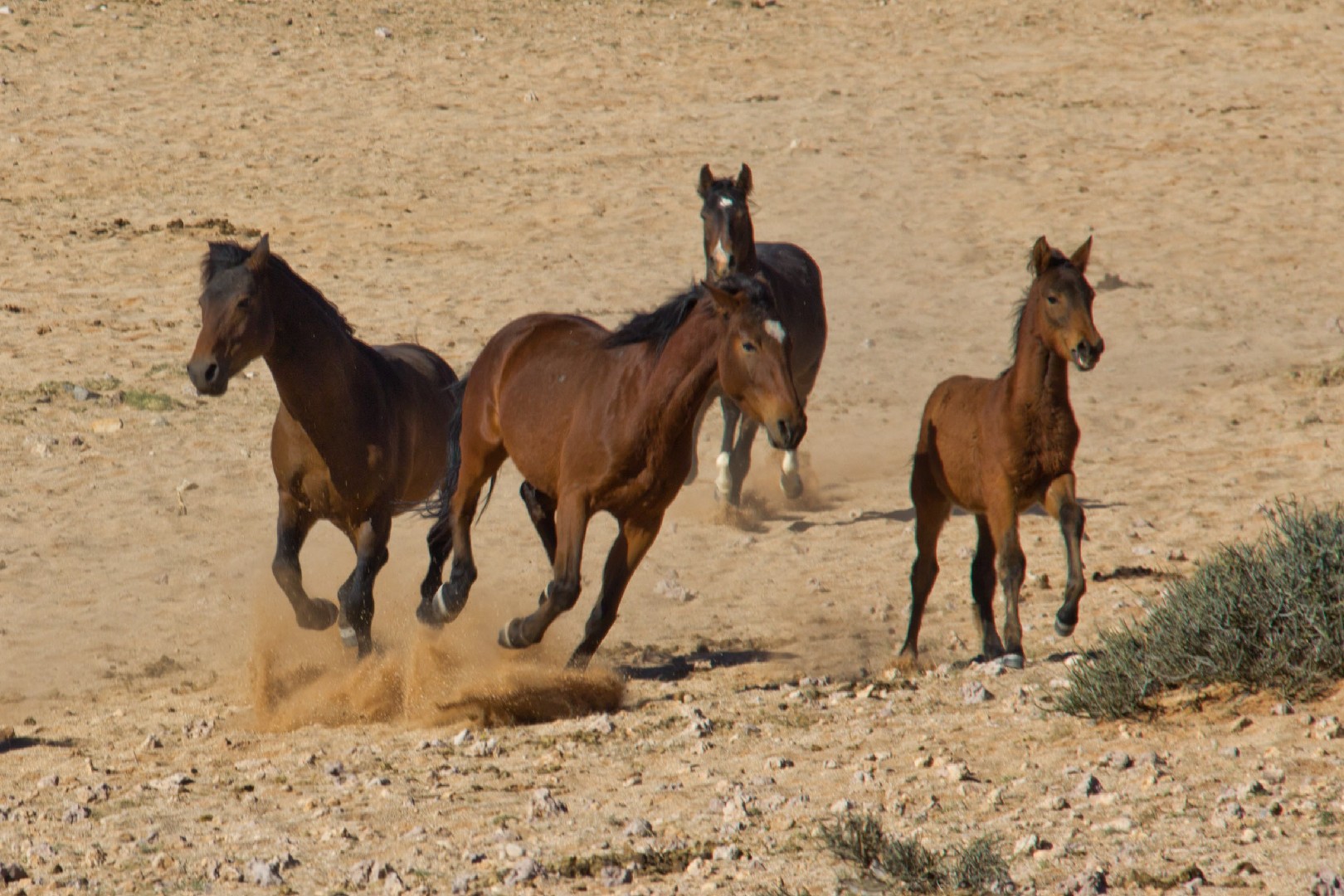 Photo By Gerald de Beer , used under CC-BY-2.0 /Cropped and compressed from original
Description

Emerging from the harsh climates of Africa, the namib Desert Horse is uniquely adapted for survival. They prize, above all, endurance, being able to survive several days without water, a feat uncommon amongst equine breeds. Interestingly, the namib Desert Horse's origins are shrouded in mystery, with theories ranging from abandoned World War I cavalry horses to shipwreck survivors. These graceful creatures epitomize resilience and fortitude amidst adversity.
Care Level
Moderate

General Info
Origin
Namibia
Lifespan
20-25 years
Characteristic:UsageDescription
Tourism, riding, wilderness survival adaptability
Temperament
Hardy, adaptable, independent, resilient, sociable
Diet
Grass, dry manure
AdultSize
14-16 hands
Appearance
Standing an average of 15 to 16 hands high, namib Desert Horse displays a sturdy build with well-developed muscles that signify their resilience and endurance. Coats come primarily in solid patterns, encompassing hues from bay to roan, featuring a shiny luster exuding unusual beauty. The mane and tail present shades similar to their body, often long and flowing, emphasizing their fine footing and agility in arid terrains. Distinctive markings are rare, while radiant eyes exhibit a gentle gaze. Notably, this breed's physicality subtly alters with age, developing defined musculature apt for survival in desert environments.
Behavior
Namib Desert Horse displays a remarkably hardy and adaptable temperament, able to endure harsh desert climates with minimal human intervention. They are typically sociable, forming tight-knit herd groups for protection against predators. These horses are naturally alert and sensitive to their environment, demonstrating swift responses to potential threats. They've adapted innovative grazing and water conservation behaviors to survive in their arid habitat. Despite their wild nature, they are amenable to training when properly approached.


Scientific Classification
Phylum
Chordates Class
Mammals Order
Odd-toed hoofed mammals Family
Horse family Genus
Asses and zebras Species
Equus caballus Breed
Namib Desert Horse 
AI animal expert in your pocket



Scan QR code to download


