


North-western sandslider
A species of Lerista Scientific name : Lerista bipes Genus : Lerista
North-western sandslider, A species of Lerista
Scientific name: Lerista bipes
Genus: Lerista
Content
Description General Info
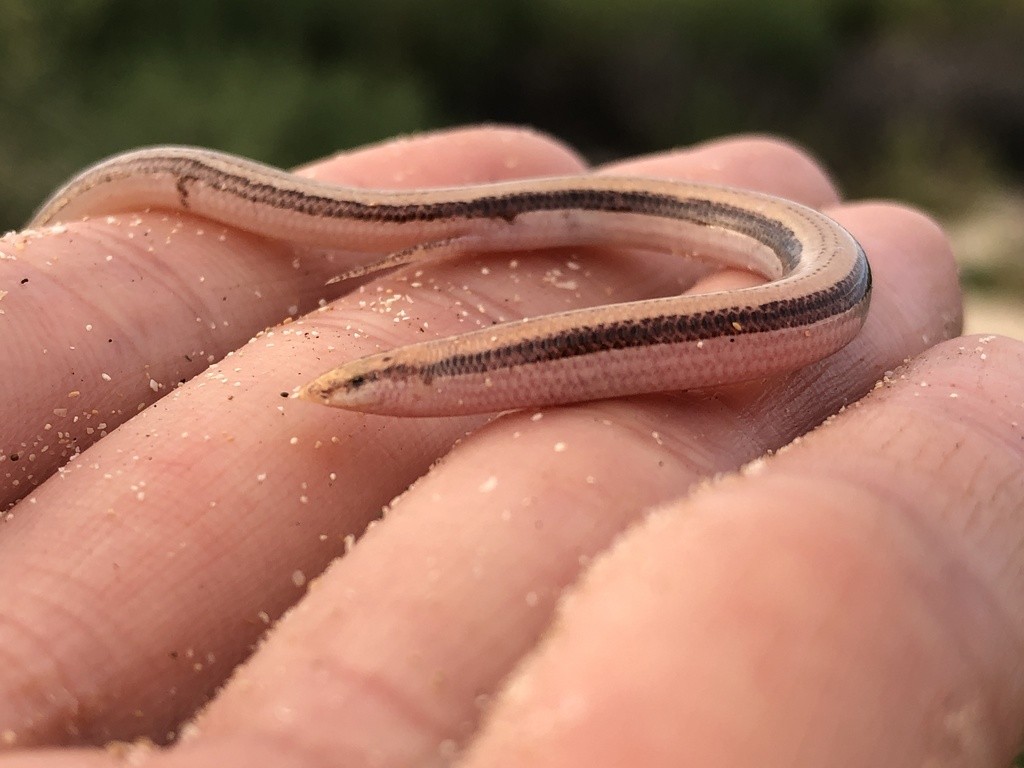 Photo By timkarnasuta , used under CC-BY-NC-4.0 /Cropped and compressed from original
Description

North-western sandslider exhibits burrowing behavior, a trait adapted for survival in arid Australia. This skink largely subsists on a diet of invertebrates, which become more accessible through its tunneling activity. Furthermore, its viviparous reproduction capacity- giving birth to live young, is a beneficial trait for survival in its harsh native environment.

General Info
Lifespan
6-10 years
Diet
The two-toed slider, north-western sandslider, primarily feeds on invertebrates. This ambush predator strategically consumes beetles, spiders, and crustaceans with its robust jaws. Its diet reflects its terrestrial environment's ample fauna availability.
Appearance
North-western sandslider is a small, slender reptile with a long, tapered body covered in smooth, rounded scales. It boasts a muted colouration, ranging from dull brown to grey, camouflaging efficiently with its native habitat. Most noticeably, north-western sandslider possesses only two limbs, its rear legs, which are diminutive compared to its body. This species doesn't exhibit noticeable sexual dimorphism or age-related differences in appearance.
Behavior
North-western sandslider exhibits solitary behavior, spending the majority of its day digging and burrowing in search of food. It has unique locomotion due to limb reduction, sliding sideways like a snake rather than traditional skink walking. This species does not defend a particular territory, with its survival strategy relying on nuanced camouflage within its sandy environments.
Population
Stable


Scientific Classification
Phylum
Chordates Class
Reptiles Order
Lizards and snakes Family
Skinks Genus
Lerista Species
North-western sandslider 
AI animal expert in your pocket



Scan QR code to download


